
I recently took a trip to the Dolomites, and had very specific needs for a hotel: great reviews, hiking that started at the front door, close to ski lifts, and a spa with more than one sauna. Two years ago that list would have cost me several weekends of open tabs and cross-referencing. This year it took seconds. I described what we wanted to a chatbot, got a shortlist, and booked.
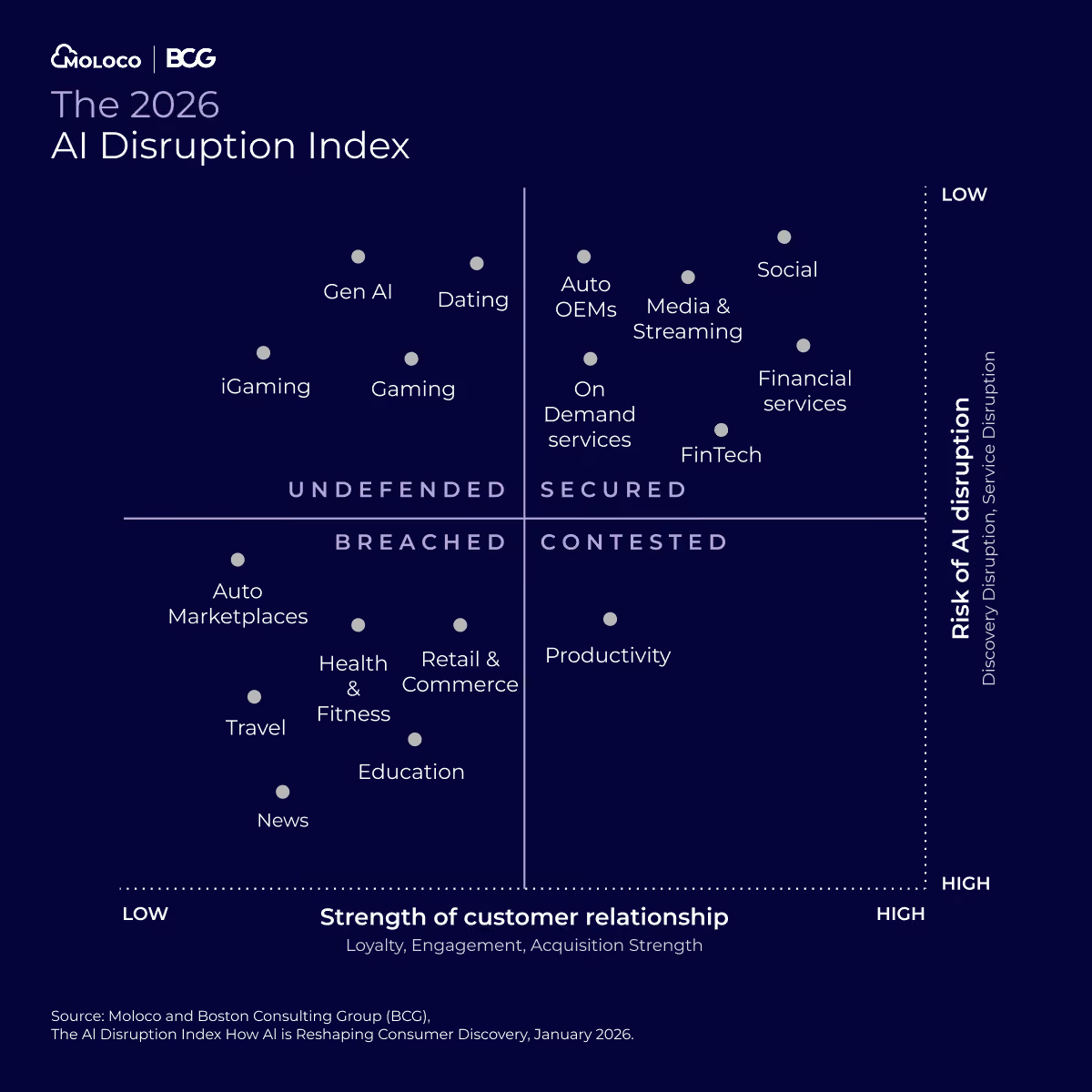
Consumer behavior like mine is shifting rapidly – it’s reshaping digital discovery. Earlier this year, Moloco published research with Boston Consulting Group that quantified AI disruption by industry. The AI Disruption Index looked at 17 industries on two dimensions: The risk of AI disruption and the strength of their customer relationships.
The industries were mapped into four quadrants:
- Breached companies face high disruption with weak customer ties, which makes them the most vulnerable.
- Undefended companies are safer from AI today, but haven't built the relationships they'll need for the future.
- Contested is represented by productivity companies that face disruption but are sticky and are quickly becoming AI-powered apps.
- Secured companies have low disruption risk and strong relationships. This is the safest quadrant.
Six months in, we wanted to see how quickly these shifts are accelerating. Here’s what we found.
Web traffic is falling fastest where AI can do the job of the visit
First, we wanted to more deeply understand how the Google Zero phenomenon is affecting web traffic. So we looked at year over year changes in global website traffic for 156 leading brands through June 2026, mapped against the index quadrants.
.avif)
Not surprisingly, we see more web declines in the more disrupted industries: News fell 26%, education 22% and health and fitness fell 16%. The through line is that the hardest hit categories are the ones whose core web offering was information. If a model can answer the question, the visit stops happening. Categories built around a transaction have held up better so far, which could be why travel is bucking the trend of its quadrant and not losing web traffic.
App usage is showing greater resilience
Next, we took a look at mobile app traffic and usage, looking at the same year over year period. Here we looked at monthly active users in the top 100 apps in each industry.
The disruption here is not nearly as intense.
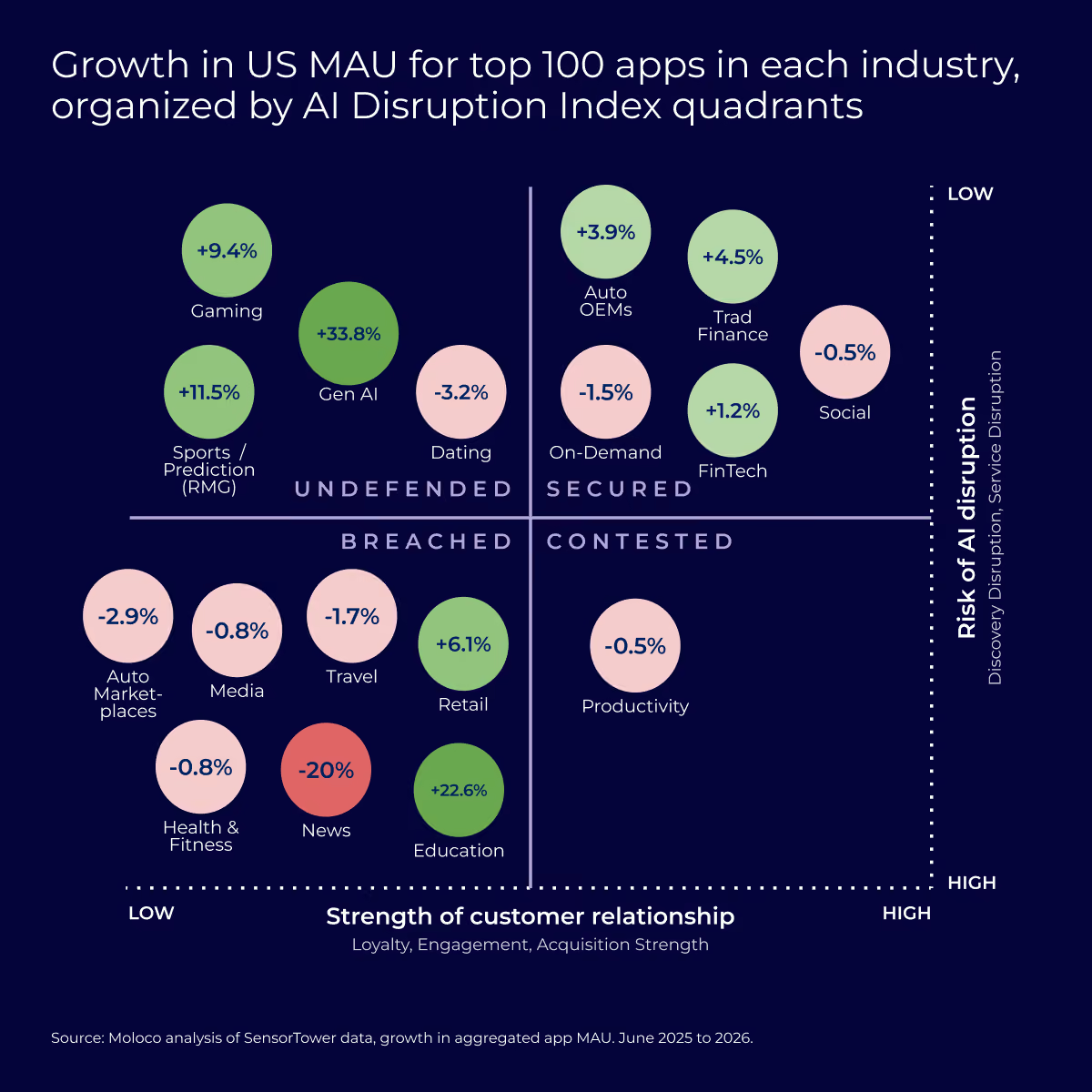
App usage has actually grown or held steady across most categories, with retail growing 6.1%, gaming 9.4%, and traditional finance 4.5%.
Education saw a big jump in MAUs, 22.6%. Digging deeper, we found that the growth in this category is coming from AI-native study apps while legacy players decline.
Paid installs are rising in every industry
One reason app usage is holding? Brands across all industries are increasing their investment in user acquisition.
We looked at the year over year change in paid share of installs, and it rose in every single industry in the index. Sports and prediction climbed 20.3%. Traditional finance and news both rose 8.4%. On-demand services and dating rose 5.3% each.
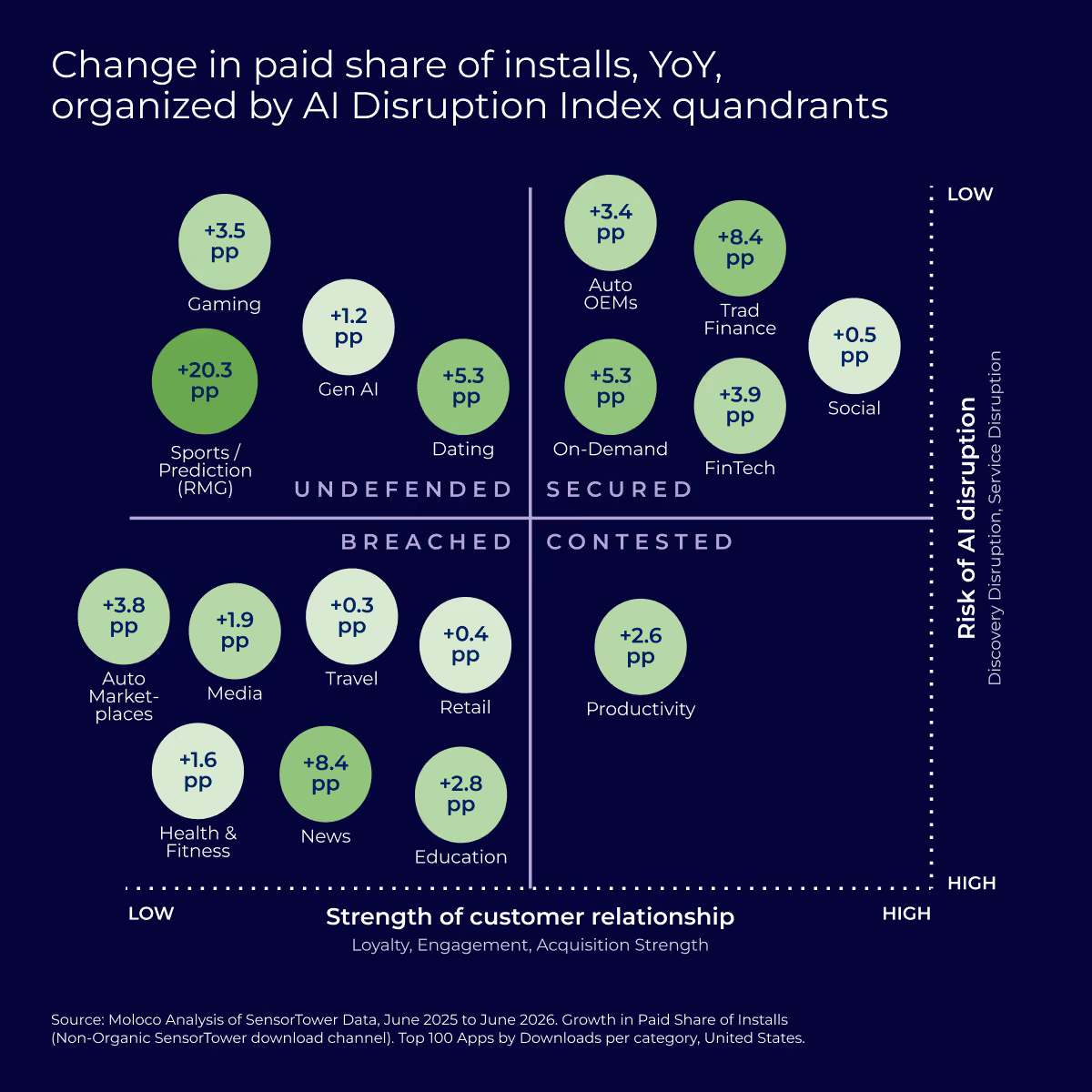
The biggest increases sit in categories with deep budgets and intense competition, not in the categories under the most AI pressure. In some cases paid installs are growing, and in others organic installs are shrinking. Either way, the mix is moving toward paid, and it makes sense. Apps are stickier than the web. They make better use of first-party data to improve the experience. They give a company acquisition channels it controls.
Responding to the disruption
As I and many millions of people are using chatbots more and more in every aspect of the path to purchase, brands are shifting to keep up. Looking at travel as an illustrative industry, we see a few patterns in how brands are adapting for travellers like me:
They’re evolving their product strategy toward the work AI cannot complete on its own. Tripadvisor, for example, is moving toward Experiences and away from the SEO-dependent parts of its legacy business.
They’re focusing on app and direct. Booking reports that the share of room nights booked through its mobile apps is rising, with the significant majority of those coming through direct channels.
They’re partnering with LLMs and building AI-native product experiences. Priceline rebuilt its Penny assistant in June as an agentic system that coordinates more than ten specialized agents, drawing on multiple frontier models for different parts of the job.
Discovery is shifting fast, and it will keep accelerating. The customer relationship is what endures through it, and finding ways to get closer to your customers is the most important work in front of marketers right now.
The full AI Disruption Index, including industry deep dives and recommended strategies by quadrant, is available here.